
- Home
- Research and Informed Policy
- Development of training modules - TSC
Development of training modules - TSC
Conserve India, in collaboration with the Textile Sector Skill Council (TSC), developed a set of modular training programs to create green jobs in textile waste management, addressing the widespread lack of formal skills among informal workers in the sector. Based on extensive field research and stakeholder consultations, the initiative introduced three specialized training manuals for roles in collection, recycling machine operation, and entrepreneurship. The programs were successfully piloted with informal workers, artisans, and college students, and refined through a multi-stakeholder roundtable. Currently under review for TSC certification, these training modules offer a scalable, inclusive pathway to equip youth, women, and informal workers with the skills needed to participate in India’s growing circular textile economy.
Partner organisations: Textile Sector Skill Council, National Skill Development Council, OMEMY
Implementing organisation: Conserve India
Modular Training Programs for Green Jobs in Textile Waste Management
What we did
Conserve India, in collaboration with the Textile Sector Skill Council (TSC), developed a series of structured, modular training manuals aimed at building the capacity of workers across the textile waste value chain. Drawing on years of experience in circular textile systems, Conserve addressed a significant gap: the lack of formal training, safety knowledge, and business readiness among waste collectors, sorters, recyclers, and repair workers.
Following a detailed skill gap assessment—including focus group discussions, stakeholder consultations, and participatory mapping—three specialized job roles were identified, and corresponding training programs were developed:
- Textile Waste Recycler – Collection and Segregation
- Textile Waste Recycling Machine Operator
- Entrepreneur – Textile Waste Management & Recycling
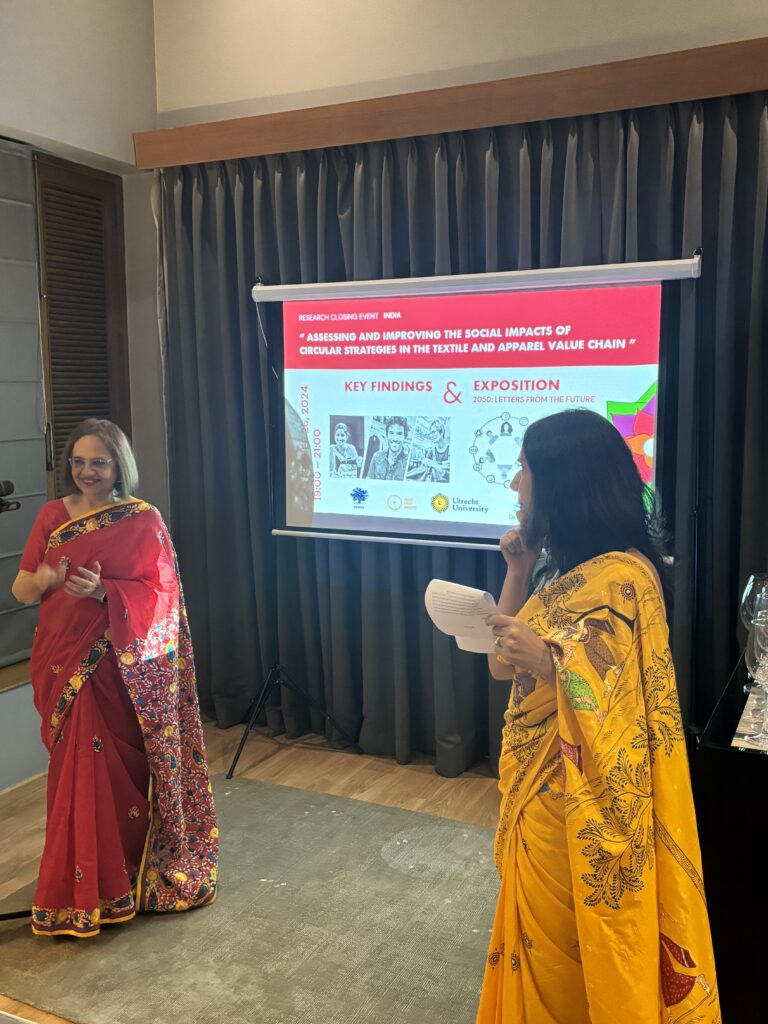
The training modules were field-tested at the SSMI Subha facility in Delhi NCR with participation from local artisans, municipal officials, and informal waste workers. Simultaneously, the courses were also piloted with students at Lady Irwin College, validating their effectiveness in both community and academic contexts.
To ensure broader sector alignment, Conserve convened a multi-stakeholder roundtable including industry leaders, NGOs, skilling institutions, and government representatives. Their inputs helped enhance the practical relevance and certification readiness of the manuals under the TSC framework.
Why It Matters
India’s circular economy transition in the textile sector depends on a trained and empowered workforce. Yet, most informal workers operate without access to safe practices, modern tools, or upskilling opportunities. These manuals fill that void by offering certifiable, job-relevant, and scalable training—adaptable to various literacy levels and socio-economic backgrounds. The program equips women, youth, and informal workers with the tools to participate meaningfully in a growing green economy.
Outcomes
- Three modular training programs tailored to technical, operational, and entrepreneurial needs
The project is currently in its finalization phase, with the training manuals undergoing review for formal approval by TSC. Once endorsed, they will offer a replicable, scalable, and certifiable pathway for India’s emerging circular economy workforce—positioning informal and aspiring workers for dignified, future-ready employment in the textile waste sector.
Our Partners