- Home
- Research and Informed Policy
- Circular Handspun
Circular Handspun
Circular Handspun was a pioneering collaboration between Conserve India, Khadi London, Khamir, and Where Does It Come From?, supported by the British Council and University of the Arts London, that integrated circular economy principles into the India artisan sector. By upcycling 110 kg of post-production textile waste into high-quality handwoven fabric, the project revitalized traditional hand-spinning, empowered 42 rural artisans—particularly women—and created a decentralized, low-carbon production model. The initiative gained national and international recognition, including showcases at the British Council and Bharat Tex 2025, demonstrating that heritage craft and circular innovation can co-exist to drive sustainable livelihoods and scalable impact.
Partner organisations: British Council, UAL FTTI
Implementing organisations: Conserve India, Khadi London, Khamir, Where Does It Come From?
Weaving Circularity into Craft and Community
What we did
In 2024, Conserve India partnered with Khadi London CIC, Khamir, and Where Does It Come From?, supported by the British Council and University of the Arts London (FTTI), to launch Circular Khadi—a pioneering initiative under the New Landscapes India Grant Scheme. The project integrated circular economy principles into the khadi sector in Kutch, Gujarat by transforming post-production cotton waste into handspun, handwoven fabric through a decentralized, artisan-led model.
Using an “Upcycling as a Service” approach, the initiative developed a replicable process of converting 110 kg of cotton waste into 11 kg of recycled yarn, resulting in 14.5 meters of Circular Khadi fabric. Conserve India led the waste sorting protocol, developed a Textile Shredder Operating Manual, and monitored the entire fibre-to-fabric journey. A total of 42 rural artisans—particularly women—were trained and engaged in sorting, spinning, and weaving.
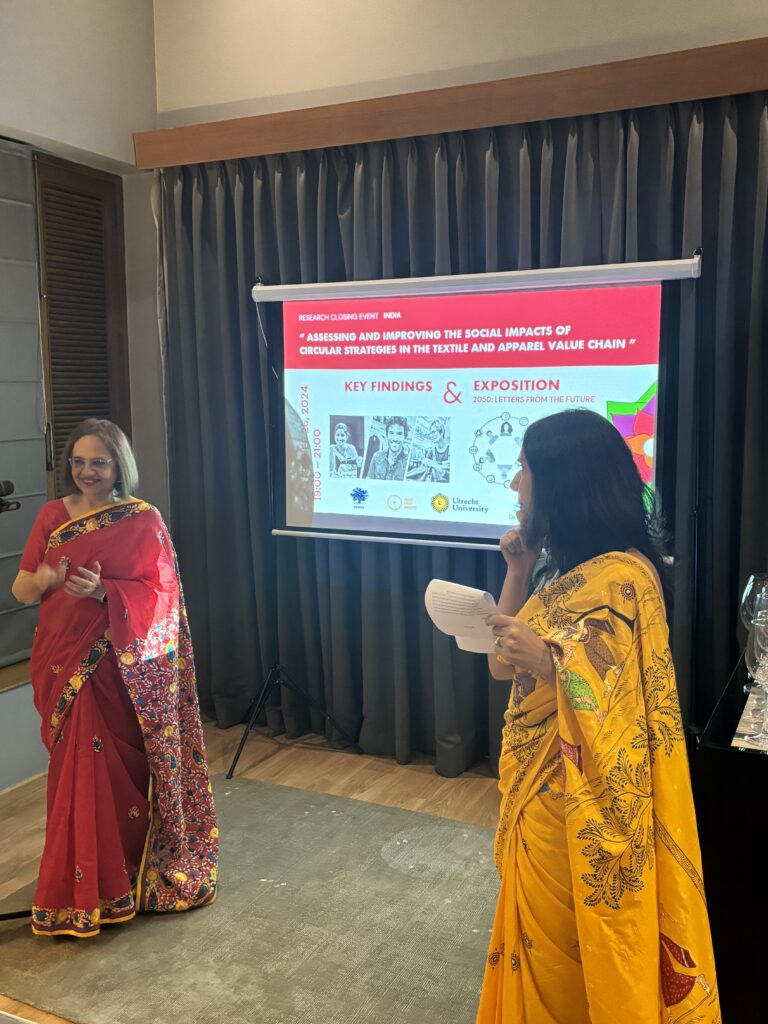
Circular Khadi received significant national and international recognition, including a showcase at the British Council during the visit of Rt Hon. David Lammy and at Bharat Tex 2025, where the Circular Handspun fabric was displayed at the Ministry of Textiles’ “Vastra Katha” Pavilion. The initiative was hailed as a scalable model for aligning traditional craft with circular innovation, bridging gaps between the handloom and recycling sectors.
Why It Matters
India’s handloom and craft traditions face dual challenges: declining artisanal livelihoods and growing textile waste. Circular Khadi addressed both by reconnecting traditional skills with climate-conscious innovation. The project revitalized hand-spinning techniques, empowered rural women with green jobs, and demonstrated how waste can be revalued within heritage-based production systems—contributing to economic, environmental, and cultural resilience.
Circular Khadi is a powerful reminder that sustainability and tradition are not opposing forces—they are co-creators of a more equitable, climate-resilient future.

Outcomes
- 110 kg of cotton waste transformed into high-value handwoven fabric
- 42 rural artisans—primarily women—trained and employed
- Revival of traditional spinning and weaving within a low-carbon production system
- Creation of a decentralized circular production model for scale
- Textile Shredder Operating Manual developed for future replicability
- Showcased at the British Council, SURE & MoT’s Circular Systems Event, and Bharat Tex 2025, receiving strong industry interest for material integration
Our Partners