
- Home
- Environmental Education
- Youth4SDG
Youth4SDG
Conserve India’s #Youth4SDG: Youth Environmental Issues Workshops program is a dynamic initiative aimed at educating, empowering, and activating young minds to become sustainability champions. Through a series of eight interactive workshops held across colleges in Delhi, Conserve reached out to youth with the mission of nurturing empathy, raising awareness on pressing environmental challenges, and promoting lifelong behavior change. The workshops are rooted in the belief that informed and passionate young individuals are critical drivers of environmental action.
Drawing from global conversations on fashion and plastic waste, Conserve designed a diverse curriculum to unpack the environmental and social impacts of the fashion industry and the plastic crisis. Participants engaged with topics such as fashion supply chains, greenwashing, textile waste, consumerism, plastic circularity, and social entrepreneurship. The program uses powerful tools like storytelling, critical thinking, and participatory activities to make sustainability relatable and urgent, encouraging youth to take responsibility for their choices and envision roles as changemakers. Ultimately, #Youth4SDG fosters a generation ready to lead with awareness, purpose, and action in the face of our planet’s most pressing challenges.
What we did
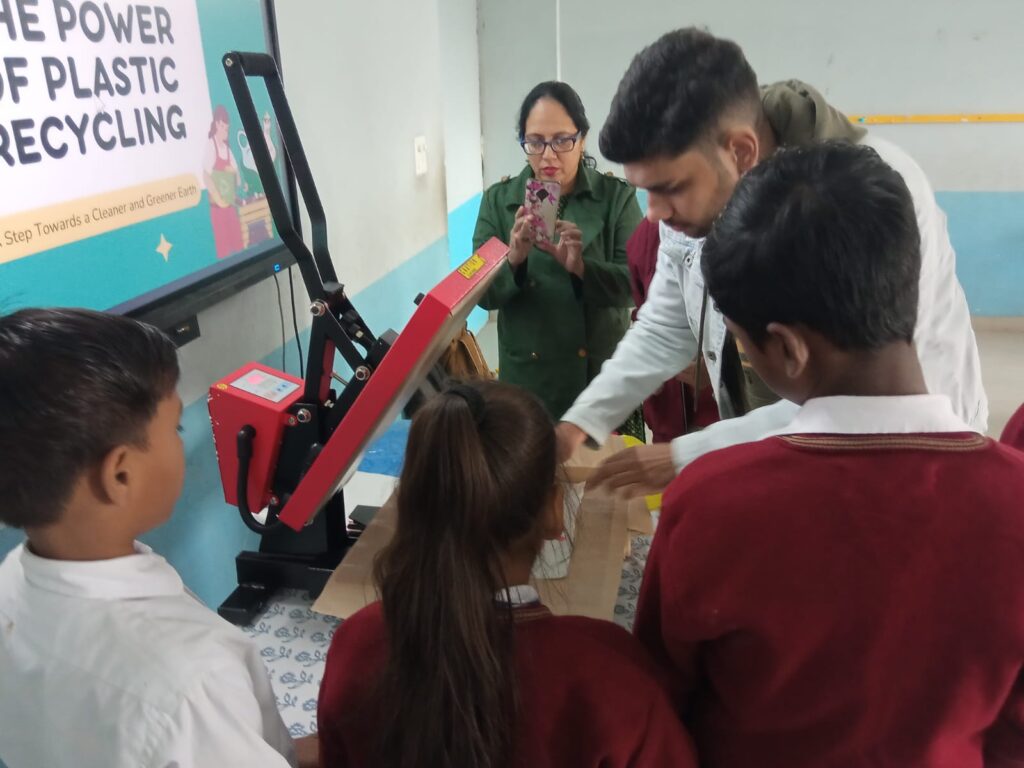
With support from Sud Chemie Pvt. Ltd., Conserve India implemented the Swachhata Ki Pahal (SKP) initiative to integrate environmental education into classrooms across Delhi/NCR. Focused on middle school students (Grades 6–8), the program introduced key themes such as:
- Plastic waste as a resource
- Waste segregation and management
- Conscious consumerism
- Circular economy principles
- Green entrepreneurship
Using AI-powered activities, engaging classroom sessions, and hands-on workshops, students were encouraged to critically examine waste systems and creatively explore reuse and upcycling.
Why It Matters
Early education plays a crucial role in shaping the values and behaviors of future generations. At a time when environmental degradation, waste pollution, and overconsumption threaten ecosystems and public health, it is essential to instill circular thinking and responsible action in school students. Swachhata Ki Pahal recognized that children are not just passive learners—they are powerful changemakers capable of catalyzing sustainability in their homes, schools, and communities.
Outcomes
Strengthened sustainability literacy and critical thinking of around 360+ students
Swachhata Ki Pahal is a replicable model for embedding sustainability in school education. It demonstrates that with the right tools and guidance, students can become effective agents of change—ready to lead their communities toward cleaner, circular futures
Our Partners